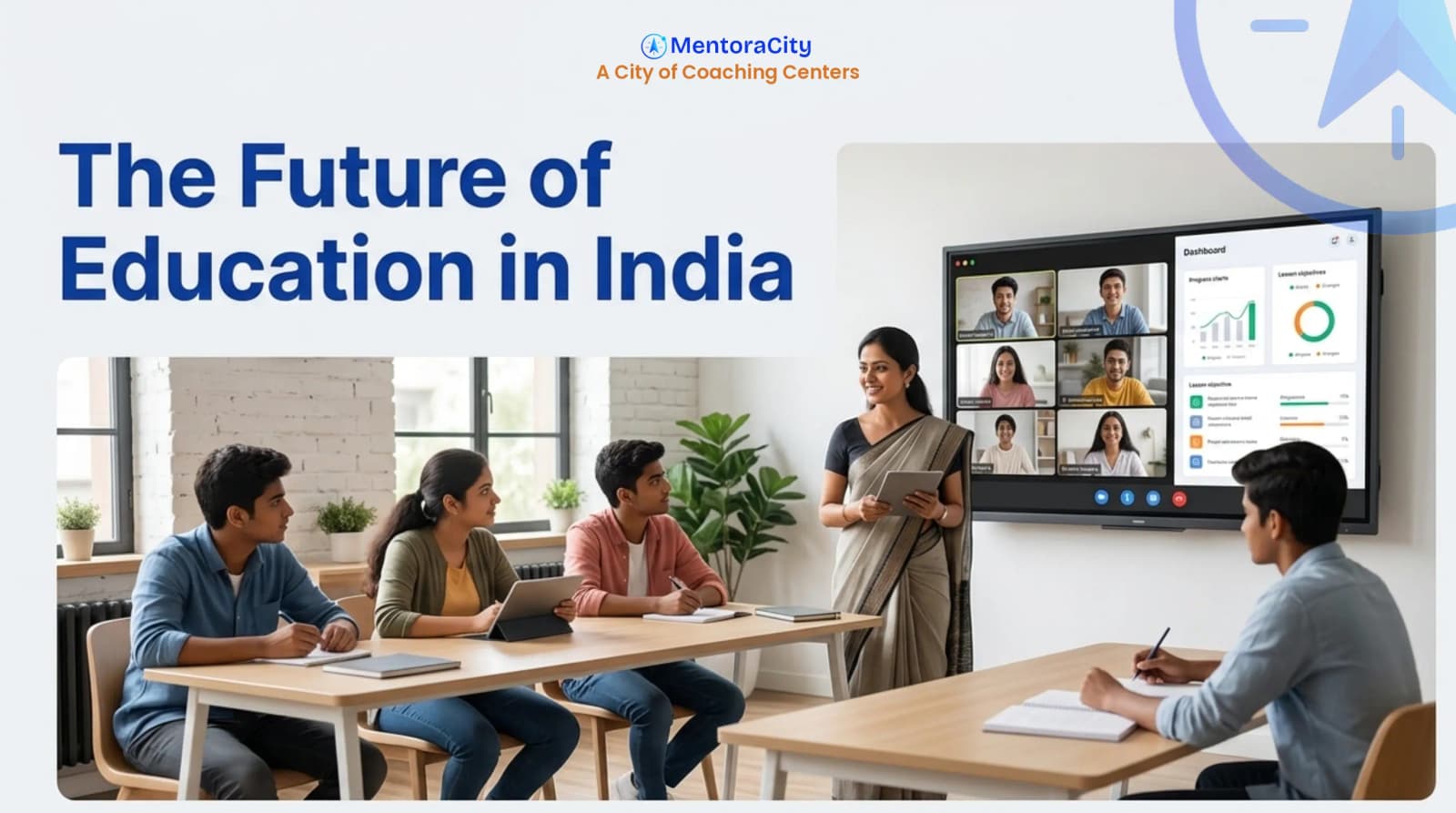
The Digital Transformation of Coaching Centers in India: What's Changed in 2026
India's coaching industry has shifted from chalk-and-register operations to digital systems. Here's what changed in 2026 and why coaching centers adopting structured platforms are pulling ahead.
 MentoraCity Team
India's Rs45,000 crore coaching industry ran on chalk, registers, and WhatsApp groups for decades. In 2026, that era is finally and irreversibly over.
Walk into a coaching center in Patna, Pune, or Hyderabad five years ago, and the scene was almost identical everywhere: a blackboard, a register, and homework announcements lost in late-night WhatsApp noise.
It worked. Until it didn't.
The pandemic did not just pause coaching centers - it exposed every crack in a system built on physical presence and informal operations. What followed was not a return to normal, but a full operational reset.
The Old World: Brilliant Teaching, Broken Operations
India's coaching culture has always been strong in teaching quality. The challenge was everything around it: discovery, fee collection, attendance, communication, and engagement beyond class hours.
Discovery depended on word of mouth, pamphlets, and local visibility. Fee management meant chasing payments manually. Attendance sat in fragile paper registers. Communication happened in noisy WhatsApp groups where academic updates got buried.
This was not just a technology gap. It was a systems gap that modern coaching-focused platforms are now solving.
What Changed: The 2026 Coaching Stack
1. Discovery Moved Online and Became Fair
Searchable marketplaces now let students and parents filter by subject, budget, location, and reviews. Quality coaches are no longer invisible just because they lack marketing spend or prime real estate.
On MentoraCity, listing is free with zero commission and no paid placement bias. Visibility is earned through profile quality, demo content, and real student outcomes.
2. The WhatsApp Group Is Finally Dying
Dedicated platforms now handle announcements, parent updates, and doubt support in structured channels. Messages are organized, searchable, and less likely to disappear in chat noise.
3. Fee Tracking Became Automated
Automated reminders, payment tracking, and dashboard-level visibility have replaced manual ledger work. Coaches save weekly admin hours and redirect that time into teaching.
4. Attendance Went from Paper to One Tap
Digital attendance records are instant, parent-visible, and analyzable. Coaches can quickly identify risk patterns and respond before students drift.
5. Community Replaced Isolation
The strongest coaching platforms now operate as ecosystems: doubt-solving, peer interaction, teacher content, and reputation-building all happen continuously, not just during class time.
Who's Winning in This New World?
The winners are not always the biggest institutes. They are the most systematic operators: coaches using automation for fees, structured communication for engagement, and consistent digital visibility to attract qualified inquiries.
What Hasn't Changed (And Shouldn't)
The core of coaching remains human: a teacher who believes in a student and a student who responds to that belief. Digital systems do not replace this relationship - they protect it by removing operational chaos.
The Road Ahead
By 2027, coaching centers without digital systems will feel outdated. The early-mover advantage in discoverability, trust, and operational efficiency is being captured now.
MentoraCity is a free coaching marketplace and LMS built for Indian coaching centers - zero commission, zero listing cost, and a learning community that stays active 24/7. Join free at mentoracity.com.