The Teenage Queen Who Defied an Empire: The Untold Story of Rani Gaidinliu
At 13, she had no school to go to. At 16, she was leading a rebellion against the British Empire. This Independence Day, meet the freedom fighter history almost forgot.
 MentoraCity Team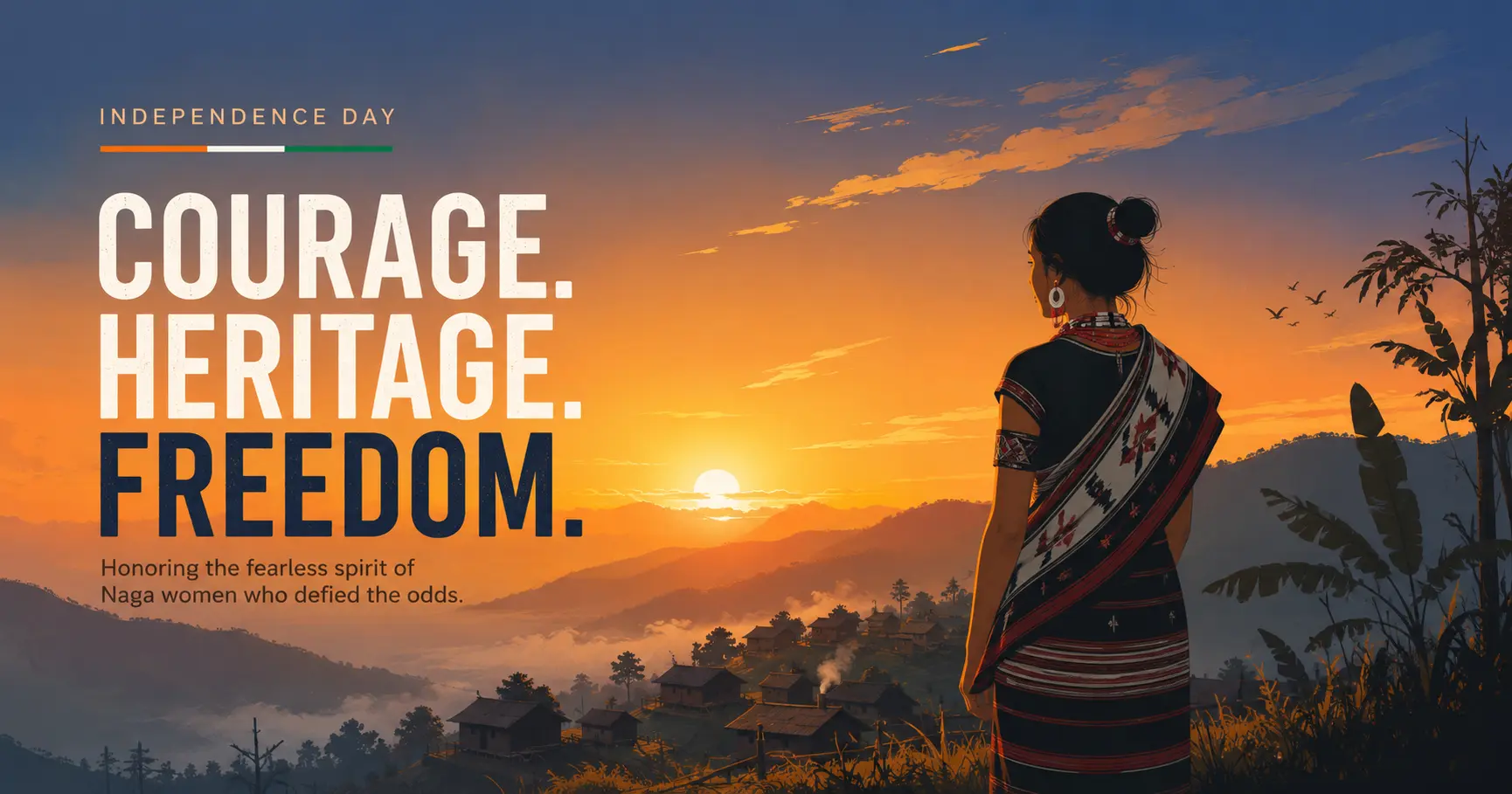
Every August 15, the same names return to us — Gandhi, Nehru, Bose, Bhagat Singh. They deserve every word written about them. But tucked away in the mist-covered hills of Manipur is a story most of India never learned in school: the story of a girl who took on the British Empire before she was even old enough to vote, and who did it without ever sitting in a classroom.
Her name was Gaidinliu. History remembers her as Rani Gaidinliu — the Queen.
A village with no school
Gaidinliu was born on 26 January 1915 in Nungkao village, in what is now the Tamenglong district of Manipur. She was the fifth of eight children in a Rongmei Naga family — a family with standing in the community, but a village with no school. There was simply no formal education available where she grew up.
It's worth sitting with that for a second. The girl who would go on to out-maneuver British intelligence for years, organize an armed resistance across three regions, and become one of the most feared names in colonial Assam's police files — never had access to a classroom. What she had instead was conviction, and a cause she believed in enough to give her entire youth to it.
Thirteen years old, and already a revolutionary
At 13, Gaidinliu joined the Heraka movement led by her cousin, Haipou Jadonang — a spiritual and political movement that began as an effort to preserve Naga tradition and identity, and gradually turned into something the British could no longer ignore: organized resistance. When Jadonang was executed by the colonial government in 1931, most people expected the movement to collapse.
Instead, a 16-year-old girl picked it up and carried it forward.
Gaidinliu led an armed uprising against the British across Manipur, Nagaland, and Assam. She wasn't a symbolic figurehead — she organized, she strategized, and she fought. In 1932, the British finally captured her. She was sentenced to life imprisonment. She was sixteen.
Fourteen years in colonial jails
What followed was fourteen years shuttled between colonial prisons in Guwahati, Shillong, Aizawl, and Tura. Reports from the time describe harsh treatment and repeated attempts to break her resolve. They didn't succeed.
It was during this imprisonment that her story reached Jawaharlal Nehru, who met her in Shillong jail in 1937. He was struck by her defiance and later wrote about her in the press, giving her the title that would follow her for the rest of her life: Rani — Queen. Nehru went as far as writing to a British Member of Parliament, Lady Nancy Astor, pushing for her release. It would still take another decade before she walked free in 1947, the same year India did.
The fight didn't end at independence
Here's the part most retellings skip: Gaidinliu's story doesn't end with independence. She spent the rest of her life advocating for the rights and cultural identity of the Zeliangrong people, even pushing back against factions within her own community who wanted secession — she believed in a Naga identity within a free India, not apart from it.
The Government of India recognized her contributions much later in life — the Tamrapatra Freedom Fighter Award in 1972, the Padma Bhushan in 1982. She passed away in 1993, having spent nearly her entire life fighting for a cause she'd committed to as a teenager who had never seen the inside of a school.
Why this story matters to us
We work in education. So we notice, more than most, what Gaidinliu's story is quietly saying between the lines: access to opportunity has never been evenly distributed in this country, and yet, time and again, it hasn't stopped people from changing its course.
Gaidinliu didn't have a classroom. What she had was a reason to learn, to organize, to lead — and she built the rest herself. Somewhere in India today, there's a student without a coaching center nearby, or a teacher without a platform to reach them. That gap is exactly the one we're trying to close.
This Independence Day, her story is a reminder that freedom was never won only in the moments that made it into textbooks. It was won in a hundred quiet, undocumented acts of courage — many of them, like hers, still waiting to be told.
Jai Hind.